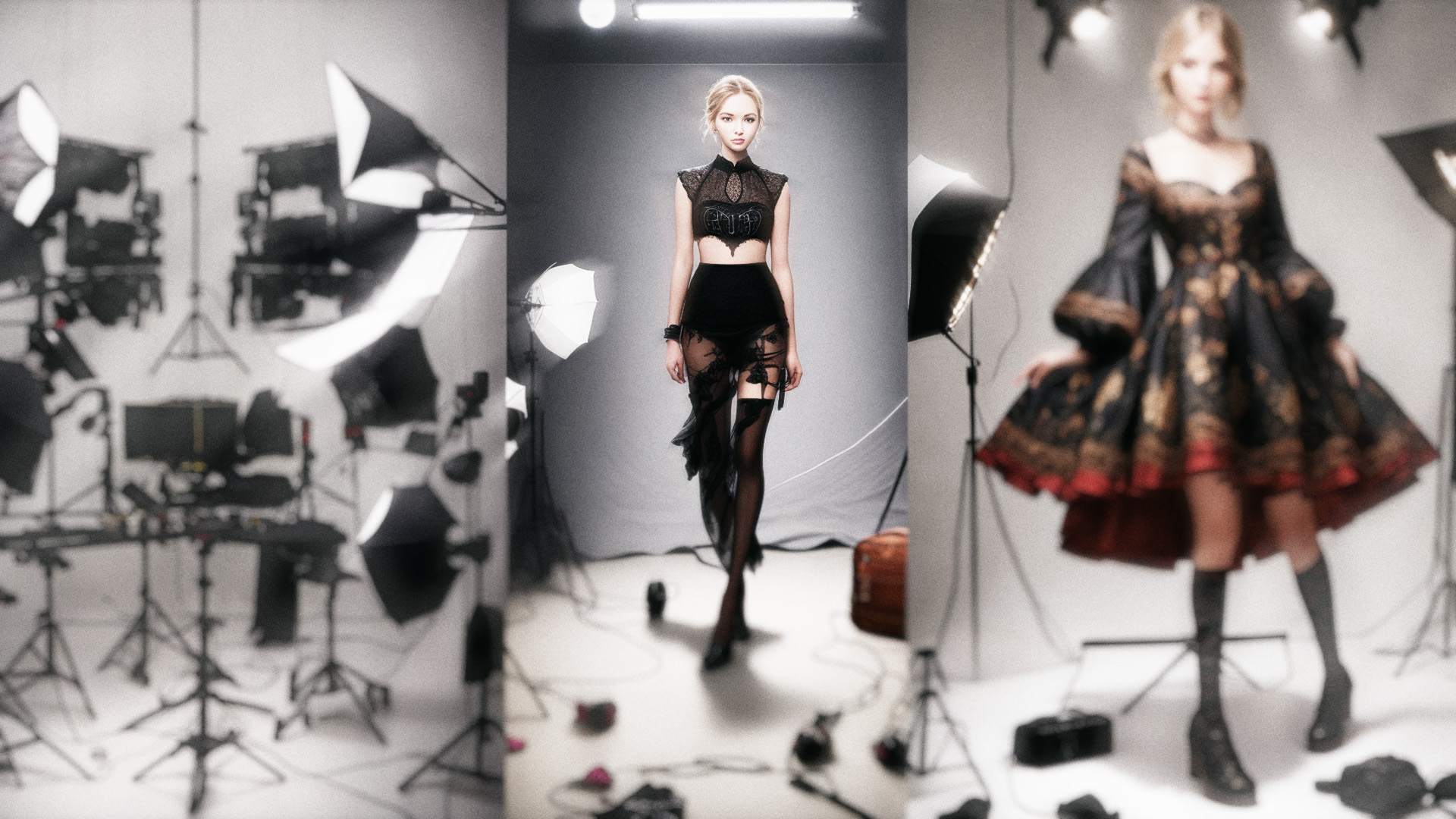
Despite powerful LED panels, RGB lighting, and AI-powered exposure tools — fundamental lighting errors are still surprisingly frequent and have the power to destroy a fantastic image. Here's what to stop doing in 2026.
- Not Understanding the Basics of Light
- Being Afraid to Experiment
- Relying Too Much on a Single Modifier
- Overcomplicating the Setup
- Ignoring Shadow Control
- Skipping Light Testing Before the Shoot
- Ignoring Each Light's Individual Purpose
- Using the Wrong Modifier for the Mood
Mistake 01Not Understanding the Basics of Light
The instruments have changed, yet the fundamentals of light have remained the same even in 2026. Direction, falloff, colour temperature, quality — all the expensive equipment in the world won't help you if you don't understand how light actually behaves. Without this foundation, you won't be able to modify the feel, highlights, and shadows in your photos.
Read books, watch tutorials on YouTube, or join lighting webinars and courses. With time you will develop a better sense for understanding mood and achieving it through light play. The basics are the foundation — master them first.
Mistake 02Being Afraid to Experiment
Lighting is as much an art form as it is a science. Because they fear "ruining" a shot, many photographers continue to use safe, dependable setups. The reality? Experimentation with angles, modifiers, and unusual light sources has produced some of the most recognisable photographs.
With traditional lighting styles and patterns you create outputs alike everyone else. The real gameplay is when you start constructing your own way to light a scene.
Start using one light as a complement to your traditional setup — place it irregularly on the backdrop, hair, or body edge. Gradually increase the number of lights as you grow more confident with the results.
Mistake 03Relying Too Much on a Single Modifier
Softboxes and beauty dishes are great — but they're not the answer to every shoot. Over-reliance on one lighting modifier limits your creativity and makes your portfolio look repetitive.
Mixing grids, gels, reflectors, and even practical lights can open up entirely new possibilities. Each modifier tells a different story. Use them accordingly.
Mistake 04Overcomplicating the Setup
In a world obsessed with gear, it's tempting to set up five or six lights for a single shoot. But more lights don't always mean better results. Sometimes a simple one or two light setup with smart positioning creates cleaner, more impactful images than an over-engineered arrangement.
Adding too many lights fills up shadows significantly — resulting in flat, dimensionless images. A side with a shadow area or a slightly darker zone adds depth and volume. A combination of fewer lights filled with V-flats or reflectors is almost always the better option.
Shadows are not problems to be eliminated. They are part of the image. Protect them.
Mistake 05Ignoring Shadow Control
Shadows can make or break your image. Not paying attention to shadow edges, unwanted spills, or harsh falloffs can ruin otherwise perfect compositions. Good lighting is as much about shaping shadows as it is about creating highlights.
A very important part of good lighting theory is the Light-Shadow Ratio — which needs to be acknowledged and mastered to create professional-looking images. This single concept separates amateur setups from editorial-quality work.
Mistake 06Skipping Light Testing Before the Shoot
During fast-paced shoots, it's tempting to start shooting right away. But not testing your light positions, exposure, and modifiers beforehand can cost you time mid-session and result in uneven, inconsistent results.
Test each individual light in isolation first — its power, direction, and pitch — before combining them. This way you know exactly what each light is contributing. If something isn't working, you can identify and fix it without second-guessing the entire setup.
Mistake 07Ignoring Each Light's Individual Purpose
Each light in your arrangement should have a distinct function — key, fill, rim, accent, or background. Careless light arrangement with no intentional purpose is no longer acceptable in 2026.
- Key light — your primary source, sets the dominant mood
- Fill light — reduces shadow depth, controls ratio
- Rim / hair light — separates subject from background
- Accent light — adds dimension, draws attention
- Background light — controls depth and environment
Only those who know the purpose of each light truly understand the difference between clicking an image and creating one.
Mistake 08Using the Wrong Modifier for the Mood
Lighting modifiers are storytelling tools. Using a harsh reflector when you need dreamy softness, or a large softbox when you want a strong-contrast fashion look, will work against your image at every level. Always choose a modifier that complements the texture and atmosphere you're going for.
This topic is vast in nature — a dedicated deep-dive on modifier selection and mood matching is coming in the next blog. Stay tuned.
"Mastering these fundamentals ensures you're not just keeping up with trends — you're creating work that stands the test of time."
These were the 8 lighting mistakes that have stayed surprisingly consistent over the years. The difference in 2026 is that clients expect more — faster turnaround, consistent quality, and a unique visual style. By working on these mistakes you're not only going to deliver better content to clients, but also improve your portfolio massively.