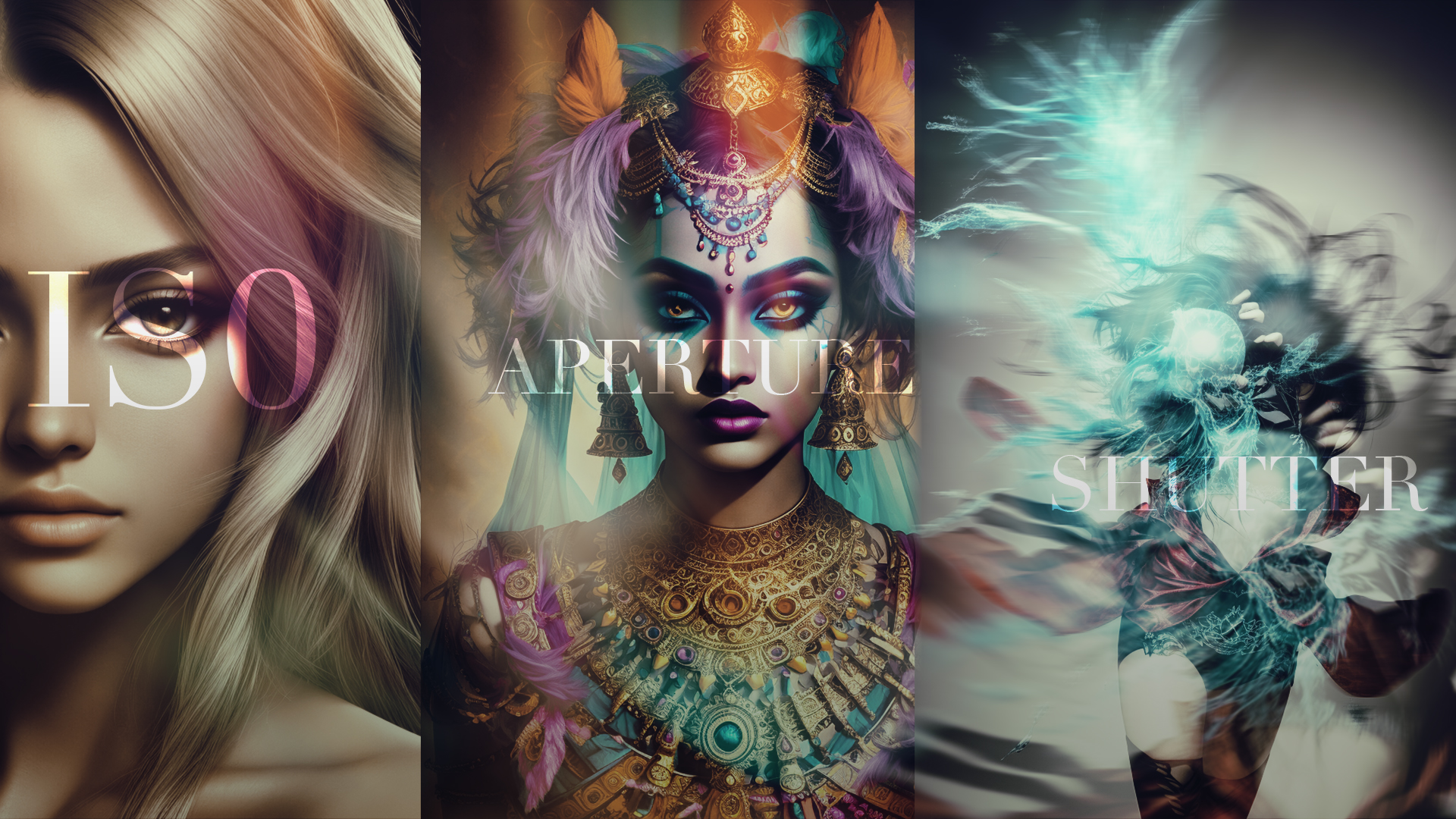
Studio flash gives you complete control over light's quality, direction, mood, and power. But to fully use it, you need to understand the camera settings that work with your strobes — not against them.
- Shutter Sync Speed Logic
- Flash Duration vs Shutter Speed
- Shutter Speed and Ambient Light
- Aperture, Depth of Field and Flash
- ISO in Studio Photography
- Light Meter — Use and Limits
- Three Ways to Control Light
- Vision Before Settings
- Additional Tips for 2026
Setting 01Shutter Sync Speed Logic with Flash Duration
The maximum sync speed of most cameras is typically between 1/160s and 1/250s. At this shutter speed, your camera exposes the full sensor to the flash without creating undesired black bars across your frame.
Flash duration is much faster — often 1/1000s to 1/10,000s — meaning the flash itself freezes the subject. Your shutter speed therefore mainly determines how much ambient light mixes with your flash exposure, not how sharp your subject is.
Shutter speed = ambient light control. Flash duration = subject sharpness. These are two separate things. Confusing them is one of the most common beginner errors in studio work.
Setting 02Why Flash Duration Matters More Than Shutter Speed
Contrary to what many photographers believe, faster shutter speeds are not what freezes motion in a flash-lit studio. With flash, the opposite logic applies.
Even if your shutter is set to 1/200s, a jumping model will be completely frozen if your flash duration is 1/2000s. The brief burst of light acts as the real shutter — stopping motion in a way the camera's mechanical shutter simply cannot match.
Faster shutter speed = sharper subject. Motion blur controlled by shutter.
Flash duration freezes the subject. Shutter speed controls ambient bleed only.
Setting 03Shutter Speed and Ambient Light Relation
Shutter speed controls how much ambient light — practical lights, windows, set lamps — enters your frame alongside the flash. This is a powerful creative tool that most photographers underuse.
Use slower shutter speeds creatively to balance flash with ambient styling elements on set. A warm practical lamp blending with your key light can add mood that no modifier alone can create.
Setting 04Aperture, Depth of Field and Studio Flash
In studio flash photography, aperture serves two distinct purposes simultaneously — and understanding both is essential for fashion and editorial work.
Unlike ambient shooting, changing aperture has a direct impact on flash exposure. If your flash is correctly exposed at f/8 and you open to f/4 without adjusting flash power, your image will be 2 stops overexposed. Always balance aperture with flash intensity together.
Setting 05ISO and Its Effect on Flash and Ambient Light
ISO increases the sensor's sensitivity to both ambient light and flash — but high ISO is rarely required in studio photography. A low ISO guarantees full dynamic range and clean, noise-free files. This is non-negotiable for professional brand and fashion work.
| ISO | Flash Power | Result | Use |
|---|---|---|---|
| ISO 100 | 1/16 power | f/8 exposure | Ideal — clean, full dynamic range |
| ISO 200 | 1/16 power | f/11 exposure | Acceptable — still clean files |
| ISO 400 | 1/16 power | f/16 exposure | Too bright for most fashion — avoid |
Stick to ISO 100–200 for all studio flash work. If you need more exposure, adjust flash power or aperture — never reach for ISO as a first solution in studio.
Setting 06Light Meter — Use It, But Don't Worship It
A light meter measures your flash and recommends aperture settings. It's a useful starting point — but it ignores creative intention entirely. Mood, contrast, and artistic priority are invisible to a meter.
f/11 — technically correct exposure for the light present.
f/5.6 — shallower depth, softer tones, more mood for the editorial.
Use the meter as a starting point. Then adjust based on your creative vision. The meter serves you — not the other way around.
Setting 07Three Ways to Control Light in Studio
Once you understand that studio lighting is fully in your hands, you realise there are exactly three levers you can pull to shape your exposure:
- Flash Intensity (Power) — Directly reduces or increases brightness. The most common adjustment during a shoot.
- Flash Distance to Subject — Closer makes light brighter and softer. Farther makes it darker and harder. Moving the light changes both exposure and quality simultaneously.
- Aperture — Opens or closes to let in more or less light, while also controlling your depth of field.
Most photographers only adjust flash power. The best photographers use all three levers together — combining distance, power, and aperture to shape not just exposure, but the entire character of the light.
Setting 08Vision Before Settings — Always
Settings are technical. Your vision is artistic. Before touching a single dial, ask yourself what you're actually trying to create. This one habit separates photographers who execute from photographers who create.
f/8, ISO 100, neutral tones, clean shadows. Every detail of the garment visible and intentional.
f/2.8, slower shutter for ambient bleed, selective focus, deeper contrast in the shadows.
The best photographers don't just set exposure — they set mood. The numbers follow the vision, not the other way around.
Setting 09Additional Tips for 2026 Studio Photographers
- Shoot tethered — Use Capture One or Lightroom to see real-time adjustments on a large screen. Consistency and client confidence both improve immediately.
- Use colour calibration tools — A ColorChecker ensures skin tones and clothing colours are accurate. Crucial in fashion where colour fidelity is non-negotiable.
- High-Speed Sync (HSS) — Modern flashes allow shooting above sync speed, useful for balancing flash with strong continuous light sources or daylight windows.
- Build a personal workflow — Take test shots, note your favourite f-stops for each setup, and document your process. Consistency is a competitive advantage.
"Your camera settings are not just a collection of data — they are the cornerstone of your creative vision."
Technical settings are only one aspect of studio flash photography — the other is purposeful light control. By understanding how shutter speed, aperture, ISO, and flash duration work together, you can shape your images with confidence and precision. Fashion photography demands control, inventiveness, and consistency. Next time you walk into the studio, set your mood before you set your numbers.
See how controlled studio light translates into real brand campaigns and editorial work.
View the Work →